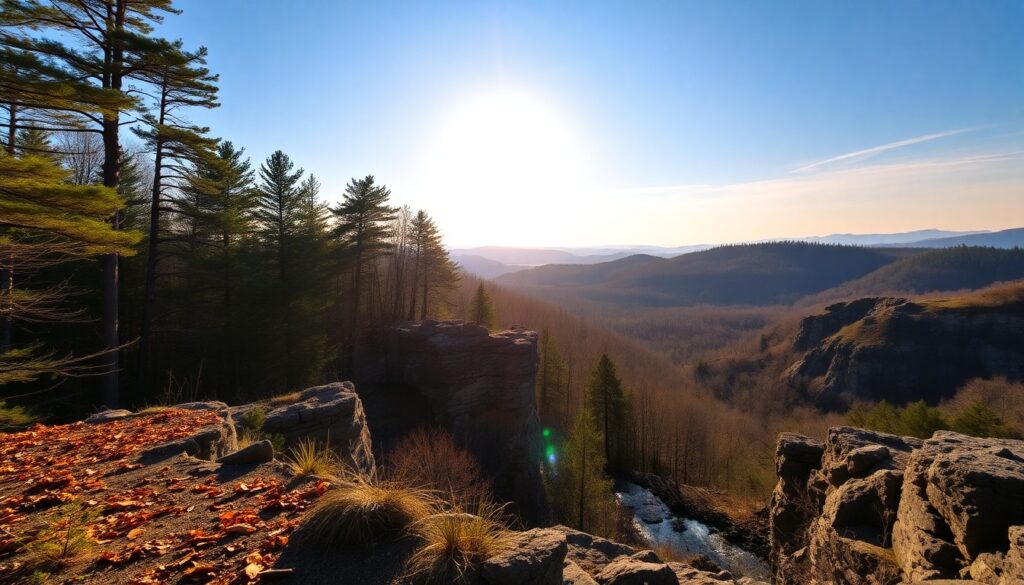
As you ascend the gentle, winding paths of the Valley Forge Mount Joy Loop, the air shifts, carrying the scent of damp earth and ancient trees. Sunlight filters through a canopy of mature oaks and maples, dappling the forest floor in a dance of light and shadow, much as it did centuries ago for Continental Army soldiers. This immersive experience offers not just a challenging hike but a profound connection to both the natural beauty of southeastern Pennsylvania and a pivotal chapter in American history, culminating in breathtaking views of the Schuylkill River valley.
Trail Specifications
Trail Name: Valley Forge Mount Joy Loop
Location: Valley Forge National Historical Park, King of Prussia, PA
Distance: Approximately 3.2 miles (loop)
Elevation Gain: ~380 feet
Difficulty: Moderate
GPS Coordinates (Approx. Trailhead near National Memorial Arch): 40.0934° N, 75.4952° W
Best Season: Spring and Fall
Dog-Friendly: Yes, on leash
Route Overview & Natural Highlights
The Valley Forge Mount Joy Loop offers a diverse journey through the heart of Valley Forge National Historical Park. You will navigate a blend of well-maintained gravel paths, earthen trails, and occasional paved sections, all winding through woodlands that feel ancient and untouched. The terrain presents a steady climb to the summit of Mount Joy, followed by a gradual descent, ensuring a rewarding workout without being overly strenuous.
Ecologically, the park is a rich habitat. Keep an eye out for towering Tulip Poplars, their straight trunks reaching for the sky, alongside various oak species like the Northern Red Oak and White Oak, which dominate the forest canopy. In spring, the understory bursts with life, showcasing native Dogwood and Redbud trees in bloom, accompanied by a carpet of wildflowers. Geologically, the area is characterized by the ancient Wissahickon Formation, primarily composed of schist and gneiss, visible in rock outcroppings along the trail. This resilient bedrock has shaped the rolling hills and valleys you traverse.
Wildlife sightings are common, especially in the quieter hours. You might spot white-tailed deer gracefully moving through the trees, various squirrel species, and a wide array of birds, from the drumming of woodpeckers to the melodic calls of warblers in spring and summer. From the summit, you gain an expansive perspective of the Schuylkill River as it carves its way through the landscape, a significant waterway that has shaped the region for millennia and was vital during the encampment.
Turn-by-Turn Trail Breakdown
Trailhead Start (National Memorial Arch to Mount Joy Climb)
Your adventure typically begins near the majestic National Memorial Arch, a fitting symbol of the resilience displayed here. From the parking area, you’ll quickly find signs directing you onto the Mount Joy Trail. The initial segment is a gentle ascent, a mix of paved and gravel paths that soon transition into a more natural dirt trail. As you begin your climb, you’ll pass through dense woodlands, the path often wide enough for comfortable walking, allowing you to settle into a rhythm. Historical markers dot the route, offering glimpses into the past, reminding you of the soldiers who once marched these very slopes. Pay attention to the trail markers, as several paths intersect in this area.
Mid-Trail Features (Summit Approach & Historical Context)
As you progress, the climb becomes more consistent, though never overly steep. You’ll be enveloped by the mature forest, with intermittent clearings offering peeks at the surrounding landscape. This section is where the trail truly feels like an escape into nature, with the sounds of the park replacing urban clamor. You will pass by sites of former redoubts and encampment areas, giving you a tangible sense of the hardship and strategic importance of this ground. Keep an eye out for the distinctive bark of the Shagbark Hickory and the deep green of Eastern Hemlocks in certain damp pockets. The trail here can be stony in places, requiring sturdy footwear. The air grows cooler as you gain elevation, and the anticipation of the summit view builds.
Summit & Return (Panoramic Views to Valley Floor)
Reaching the summit of Mount Joy is your reward. While not a dramatic peak, it offers sweeping, unobstructed views over the Schuylkill River valley and the expansive parkland below. Take a moment to absorb the panorama, imagining the strategic advantage this vantage point offered. After enjoying the vista, the trail begins its descent, leading you back towards the valley floor. The return journey is generally easier, often following a different path down, offering new perspectives of the forest and historical sites. You will eventually loop back towards the National Memorial Arch, completing the circuit and reflecting on both the natural beauty and profound history you’ve experienced.
Seasonal Guide & Best Times
- Spring (April – May): The forest floor awakens with blooming wildflowers, Dogwoods, and Redbuds. Temperatures are mild and comfortable, making it ideal for hiking. Bird migration brings a symphony of sounds.
- Summer (June – August): The canopy provides welcome shade. While temperatures can be warm, early mornings or late afternoons offer pleasant hiking. The park is lush and green, and historical interpreters are often present.
- Autumn (September – November): Arguably the most spectacular season, when the deciduous trees transform into a brilliant display of reds, oranges, and yellows. Crisp air and comfortable temperatures make for perfect hiking conditions.
- Winter (December – March): A serene and quiet time to visit. With the leaves gone, views are more expansive, and the historical landscape is clearer. Dress in layers, as temperatures can be cold, and watch for icy patches.
Essential Gear & Safety
- Sturdy Hiking Shoes: The trail’s varied terrain, from dirt paths to rocky sections, requires good ankle support and grip.
- Water and Snacks: Stay hydrated, especially on warmer days, and bring energy-boosting snacks for the moderate climb.
- Map or GPS: While well-marked, carrying a park map or using a reliable GPS app on your phone (like AllTrails: AllTrails – Mount Joy Trail) is always recommended.
- Layered Clothing: Pennsylvania weather can change quickly; layers allow you to adapt to temperature fluctuations.
- First-Aid Kit: For minor scrapes or blisters, a small kit is always a good idea.
Getting There & Parking
Valley Forge National Historical Park is easily accessible from major roadways in the Philadelphia region. To access the Mount Joy Loop, you’ll want to aim for the parking area near the National Memorial Arch, which is centrally located within the park. From King of Prussia, follow signs for Valley Forge National Historical Park, then navigate towards the Arch. There are ample, free parking lots available throughout the park, and specifically near this trailhead. The park is open daily from 7:00 AM to sunset, year-round, making it a flexible destination for your outdoor pursuits. There are no entrance or parking fees for Valley Forge National Historical Park.
Curated Literature & Philadelphia Downtown Calendar
The Architecture of Focus: Deep Work & Modern Mastery
By Founders Library Press
A structured framework for strategic clarity, productivity, and authentic execution.
Upcoming Downtown Happenings
Live acoustic sessions, gallery receptions, literary salons, and independent trade shows across Philadelphia.