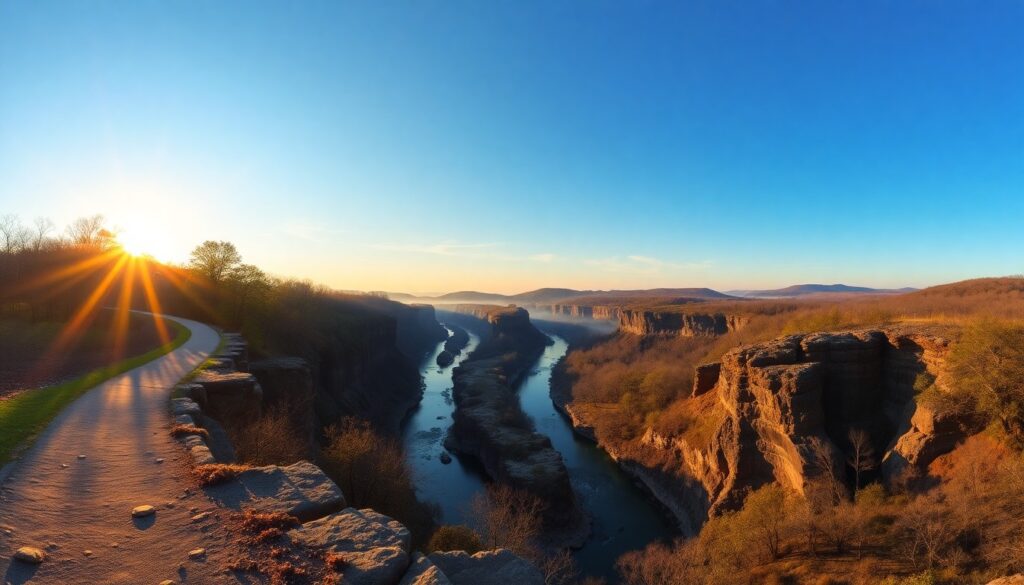
The gentle gurgle of water alongside, the rustle of mature sycamore leaves overhead, and the distant chime of an antique shop bell set the idyllic scene as you step onto the Delaware Canal Towpath in charming New Hope, Pennsylvania. This historic waterway, once a vital artery for coal transportation, now offers a tranquil escape, inviting you to slow down and immerse yourself in a landscape where nature and history intertwine seamlessly. You’ll discover a flat, accessible path that promises both serene solitude and engaging exploration along the scenic Delaware River.
Trail Specifications
- Trail Name: Delaware Canal Towpath (New Hope Section)
- Location: New Hope, Bucks County, Pennsylvania
- Distance: Approximately 7 miles (out-and-back)
- Elevation Gain: Minimal (largely flat)
- Difficulty: Easy
- GPS Coordinates (New Hope Trailhead): 40.3392° N, 74.9529° W
- Best Season: Spring, Summer, Fall
- Dog-Friendly: Yes, leashed dogs welcome
Route Overview & Natural Highlights
The Delaware Canal Towpath in New Hope offers a consistently flat and well-maintained surface, primarily crushed gravel and packed earth, making it ideal for walkers, joggers, and cyclists of all ages. As you move south from the heart of New Hope, the path quickly transitions from an urban-adjacent stroll to a peaceful journey through a verdant riparian forest. The canal, mirroring the sky above, runs parallel to the path, while the broad Delaware River flows majestically just beyond a thin screen of trees, often peeking into view.
The ecology here is rich, dominated by mature deciduous trees like the towering American Sycamore with its distinctive mottled bark, graceful Silver Maples, and hardy River Birches clinging to the riverbanks. In spring and summer, the understory bursts with native wildflowers such as vibrant Jewelweed and striking Cardinal Flower, attracting hummingbirds and butterflies. Keep an eye out for wildlife: you’re likely to spot Great Blue Herons stalking the canal’s edges, Belted Kingfishers darting for fish, and various waterfowl like Mallards gliding serenely. Turtles often bask on fallen logs, and if you’re quiet, you might even catch a glimpse of a deer or a playful otter. Geologically, you’re traversing a landscape shaped by millennia of the Delaware River’s flow, carving through sedimentary rocks like sandstone and shale, remnants of ancient seabeds, though these are mostly hidden beneath the soil and vegetation.
Turn-by-Turn Trail Breakdown
Trailhead Start: New Hope’s Heart
Your journey begins right in the lively village of New Hope, often near the foot of the iconic New Hope-Lambertville Bridge. From here, you’ll head south. The initial stretch might be shared with more pedestrians enjoying the town’s charm, but the path quickly opens up. You’ll pass historic lock houses, silent sentinels of a bygone era when mule-drawn barges plied these waters. The path is immediately flat, offering easy access and setting the pace for a relaxed outing.
Mid-Trail Features: Shaded Serenity & River Views
As you progress, the sounds of New Hope recede, replaced by the symphony of nature. The path remains consistently flat, shaded by a dense canopy of trees that provide a welcome respite on sunny days. You’ll pass occasional historical markers detailing the canal’s construction and its role in regional commerce. The canal itself, often calm and reflective, runs to your left, while glimpses of the Delaware River appear through the trees to your right. This section is perfect for finding your rhythm, whether walking or cycling, and soaking in the peaceful atmosphere. Look for small, stone culverts and aqueducts that allow smaller streams to pass under the canal, showcasing ingenious 19th-century engineering.
Destination & Return: Peaceful Reflection
For a comfortable 7-mile round trip, you can plan to turn around after about 3.5 miles, perhaps near Phillips’ Mill, a historic artists’ community that adds a cultural layer to your outdoor experience. Alternatively, for a longer adventure, continue south towards Washington Crossing Historic Park, a significant site in American history, which is about 7 miles further. The return journey offers a fresh perspective on the landscape, with the river now on your left and the canal on your right. The consistent flat terrain makes for an easy return, allowing you to reflect on the natural beauty and historical echoes you’ve encountered.
Seasonal Guide & Best Times
- Spring (April – May): The towpath awakens with fresh greenery and a burst of wildflowers. Migratory birds return, filling the air with song. Temperatures are mild and pleasant, making it ideal for walking or cycling.
- Summer (June – August): The dense tree canopy provides ample shade, making the towpath a popular escape from the summer heat. The canal is often used for kayaking and canoeing, adding to the scenery. Mornings and late afternoons are best to avoid peak heat.
- Fall (September – November): This is arguably the most spectacular season, as the surrounding forests ignite with brilliant autumn foliage. The crisp air and vibrant colors create an unforgettable experience, though it can be more crowded.
- Winter (December – March): The towpath takes on a quiet, stark beauty. With fewer leaves, views of the Delaware River are more expansive. While cold, a clear winter day offers a peaceful, solitary experience. The canal may freeze over, presenting a serene, icy landscape (not for walking on!).
Essential Gear & Safety
- Water & Snacks: Always carry adequate hydration, especially on warmer days.
- Appropriate Footwear: Comfortable walking shoes or hiking boots are recommended for stability on the gravel path.
- The Bookworm CampaignSubtle Comforts • Intentional Living
Curated Literature & Philadelphia Downtown Calendar
Philosophy & Focus Curated EditionThe Architecture of Focus: Deep Work & Modern Mastery
By Founders Library Press
A structured framework for strategic clarity, productivity, and authentic execution.
Philadelphia Calendar Downtown • Arts • CultureUpcoming Downtown Happenings
Live acoustic sessions, gallery receptions, literary salons, and independent trade shows across Philadelphia.